

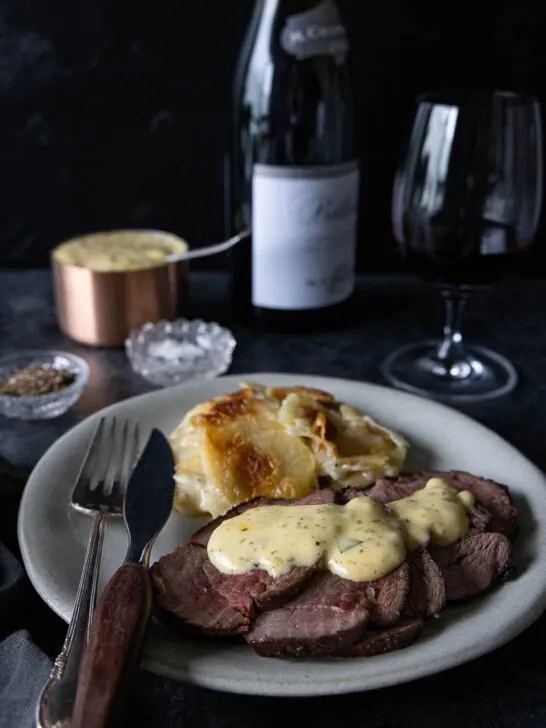
Just in time for the holidays, I’m sharing one of my favorite recipes, one that feels a little extra special and is perfect for Christmas or New Year’s Eve. It’s a classic, elegant beef roast called Chateaubriand.

I learned how to make this during lockdown, back when we thought the world might be ending and we decided to eat like it was. I was inspired by an online cooking class with Thomas Keller, and it quickly became a dish I return to whenever we want something celebratory for a dinner party. It impresses!
Don’t be intimidated by the fact that it’s “French.” This recipe is surprisingly simple, and the results feel downright luxurious.
What exactly is Chateaubriand?
In my opinion, it’s one of the most decadent and tender cuts of beef you can serve.
To clarify, it’s not filet mignon, though it does come from the same cut of beef. I always describe Chateaubriand as a fancy French beef roast, taken from the thick center of the tenderloin. Filet mignon is smaller and cut from the tapered ends of the tenderloin, and Chateaubriand is prized for its size and uniform shape.
Because it comes from the tenderloin, Chateaubriand is a very lean cut of beef and lacks the marbling you’ll find in richer cuts like ribeye or prime rib. What it offers instead is exceptional tenderness and a mild, elegant flavor which is perfect for letting simple seasoning and careful cooking shine.
Does Chateaubriand come from France?
Despite its French name, the cut of meat itself does not come from France. Chateaubriand is named after François-René de Chateaubriand, a French writer from the early 19th century. His personal chef was known for frequently preparing this cut of beef for Chateaubriand’s social gatherings, and over time the dish took on his name. Today, Chateaubriand is considered an impressive and elegant roast, making it a natural choice for special occasions and holiday meals.
How to cook Chateaubriand?
A great Chateaubriand should be tied by your butcher and ready to cook when you bring it home, so I won’t cover that step here. The best way to cook Chateaubriand is by roasting it, allowing the meat to cook evenly while staying tender.
Chateaubriand is ideally served medium-rare. Cooking it past that point, especially well-done, will diminish both its tenderness and its delicate flavor. Because the meat is mild rather than overpowering, it pairs beautifully with classic sauces such as a red wine reduction, peppercorn sauce, or our favorite, a rich béarnaise.
Prep the beef
This is a crucial step when preparing any cut of meat, and it’s especially important for Chateaubriand. Think of it as a dry brine as it locks in flavor and helps create a dry surface, which ensures beautiful browning when the beef is seared.
At least 24 hours before cooking, pat the roast dry with paper towels. Season generously with kosher salt (I prefer Diamond Crystal) and freshly cracked black pepper. Place the beef in a shallow glass dish and refrigerate it uncovered. Do not be tempted to cover it with foil or plastic wrap, air circulation is key to developing that perfect crust.
Roasting tip
Let the Chateaubriand come to room temperature for about 60 minutes before roasting, and be sure to rest it for at least 15 minutes after cooking, and before slicing. This ensures even roasting and keeps the meat tender and juicy.
The meat will roast at a very low heat until the internal temperature reaches 115 F – about 30 – 35 minutes. After roasting you will do a reverse sear to get that nice caramelized crust on the outside of the meat.
What is reverse sear, and what are the benefits?
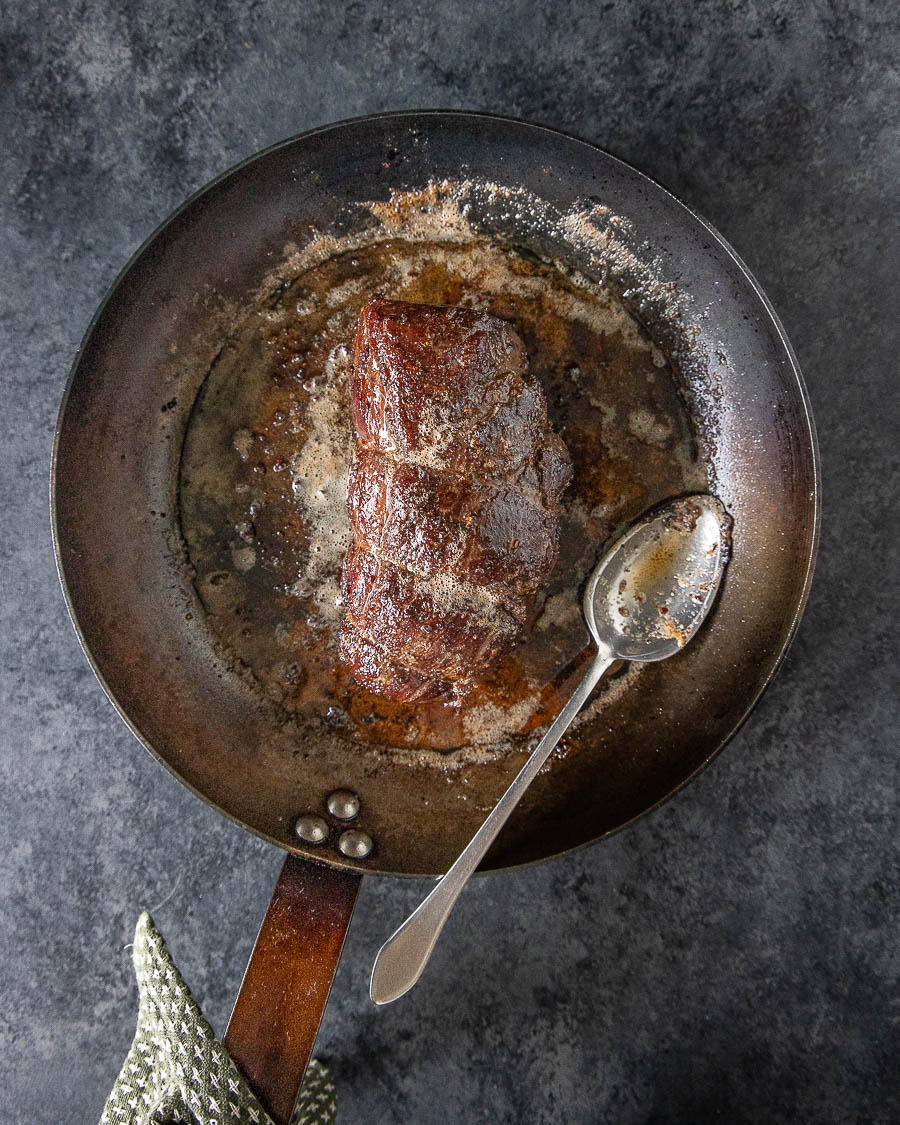
Reverse searing is a cooking method where the meat is first cooked slowly at a low temperature in the oven, then finished with a quick sear in a hot pan using olive oil, butter, and sometimes aromatics, after the meat has rested. This final step creates a beautifully caramelized exterior.
The benefits of reverse searing are significant: more even cooking from edge to center, a consistent internal color, a deeply flavorful crust, and a much lower risk of overcooking; making it an ideal method for a lean, tender cut like Chateaubriand.

Temperature guide (medium-rare)
Remove the Chateaubriand from the oven when the internal temperature reaches 115°F and let it rest for 10 minutes. Then reverse sear the outside of the roast, creating a flavorful crust that enhances both texture and flavor.
This final step brings the meat to its ideal internal temperature of 130–135°F for a perfectly cooked medium-rare Chateaubriand.
What to serve with Chateaubriand?
Chateaubriand pairs beautifully with rich potato dishes such as creamy potatoes au gratin or classic mashed potatoes, especially when served with a rich wine sauce. Duck-fat fried smashed potatoes also make an excellent and indulgent side. Don’t forget something green such as lightly sautéed green beans or a simple green salad with winter radishes and a shallot dijon dressing.
A great sauce is essential for this recipe. Classic options include a red wine reduction, béarnaise, Roquefort sauce, or a green peppercorn sauce; all perfect complements to the tender, mild flavor of Chateaubriand.
Recipe: Chateaubriand
serves 4
Ingredients
-
2 lbs Chateaubriand (ask your butcher to tie the roast)
-
Kosher salt
-
Freshly ground black pepper
-
1 tablespoon olive oil
-
1 tablespoon unsalted butter
How To Make Chateaubriand
Prep the Chateaubriand
-
Pat the roast dry with paper towels.
-
Season lightly and evenly with kosher salt and freshly ground black pepper.
-
Place a small metal rack inside a shallow baking dish and set the roast on top. (If you don’t have a rack, you can place the meat directly in the dish just turn it occasionally. The rack allows for better air circulation.)
-
Refrigerate uncovered for 24 hours.
Cook the Chateaubriand
-
Remove the roast from the refrigerator and let it come to room temperature for 60 minutes before cooking.
-
Preheat the oven to 300°F.
-
Place the roast in a cast iron or carbon steel pan (we prefer carbon steel).
-
Transfer the pan to the oven and cook until the internal temperature reaches 115°F, checking every 5–10 minutes with a digital meat thermometer.
-
Remove the roast from the oven, transfer it to a plate, and let it rest for 5 minutes (uncovered), while heating the olive oil and butter.
Reverse Sear
-
Place the same pan over medium heat on the stovetop.
-
Add the olive oil and butter.
-
Sear the roast on all sides until a deep, caramelized crust forms, about 2–3 minutes per side. Using a large soup spoon or basting spoon, lightly baste with the olive oil butter mixture. Check the temperature as you go to avoid overcooking.
-
Remove from the pan, place on a plate, loosely tent with foil, and let rest for another 10 minutes.
Serve
-
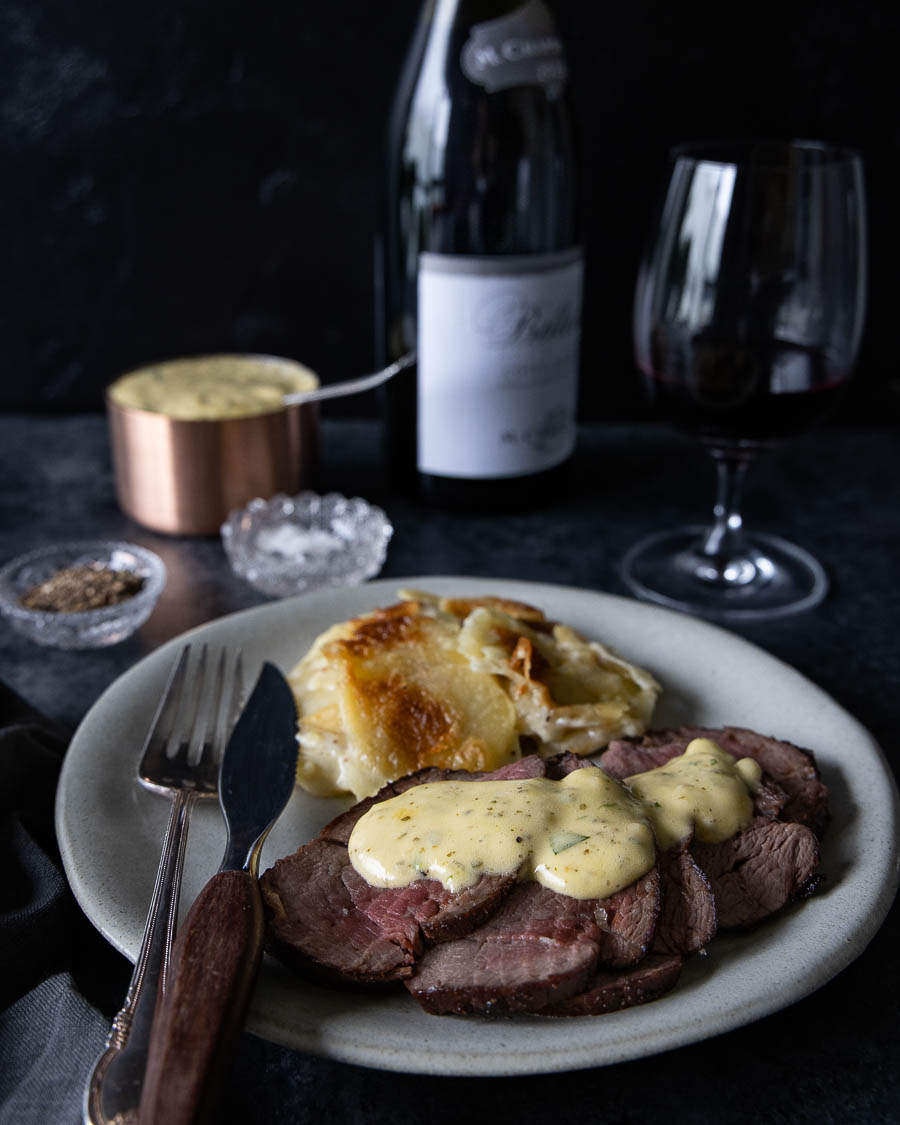
Slice the Chateaubriand into thin slices.
-
Arrange on a clean serving platter and serve immediately.