WOWZA! I was really excited when I read about the March Charcutepalooza Challenge; brining. I have been wanting to brine a brisket, to make my own Corned Beef, ever since I received the Bi-Rite newsletter, last year. Cathy and Kim, our taste-buds thank you for picking this challenge.
This month’s challenge gave us two options to play with. The Apprentice Challenge, where we could simply brine a whole chicken or pork chops. The Charcutiere Challenge, where we could brine, and then corn, a piece of beef, such as brisket. I have brined a turkey before, so I decided to forgo, the Apprentice Challenge, and grab the Charcutiere Challenge by the horns.
It would be unlike me if I did not deviate away from the required suggested recipe, and this challenge was no exception. The recipe in Michael Ruhlman’s book Charcuterie: The Craft of Salting, Smoking and Curing for brining has the addition of “pink salt”. As I have mentioned before, I have a problem with using pink salt, and especially after Dominique taught me, that I do not need to use it. I did omit it from this challenge. Brining is simple; dissolve salt, and sugar, in water, then add warm spices to it. I used unprocessed sugar, which gave my brine a nice amber color. The spices I used were juniper berries, black cardamon pods, bay leave and some yellow onion.
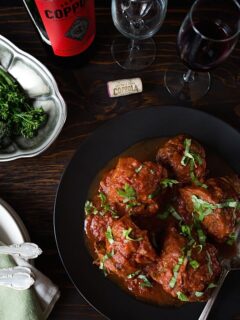
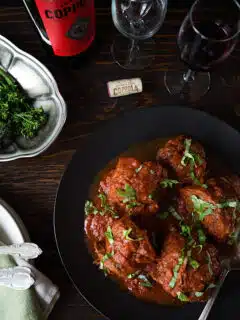
Since there are only two of us, and we don’t need to be eating brisket for days, I went with 2 1/2 pounds of beef. This would be enough for a traditional corned beef dinner as well as a little extra for hash. I picked up a beautiful cut of beef brisket at the market. Once my brine mixture was ready, I submerged the brisket into the salty bath, put a small plate on top of the meat, to hold it down, covered my pot, and put it into the fridge; out of sight, and slightly out of mind. I did check, every couple of days, to make sure the brisket was still well submerged. Finally, day seven approached, I could not wait. I figured the process would work, or I would risk making us sick or kill us for not properly brining meat. The brisket, was slightly pink in color, very firm, and definitely smelled like corned beef. I rinsed it very well, patted it dry, and simmered it long and slow, in a mixture of minced onion, garlic, tomato paste and white wine. After the brisket was done cooking, I let it cool, overnight.
I tossed around the idea of simply reheating some of the stock, and drizzling it over slices of the meat, but, I wanted more. I made a glaze using Jamesons Irish Whiskey, grainy mustard, honey, and brown sugar. I lightly painted the slices of corned beef, with the glaze and gently reheated for a few minutes. It reminded me of candy chicken with a “kick”.
Traditional Corned Beef dinner is served with boiled cabbage, carrots, and potatoes. As I was getting ready to plunge my vegetables to their death, in a boiling pot of stock, that was left from boiling the meat; it hit me smack in the side of the head. We both hate boiled veggies, except potatoes; they are usually over-cooked, zapped of their beautiful colors, and left as a dirty, grayish heap of unidentified vegetables. Why don’t I roast them? I took the long, bright, orange carrots and drizzled them with olive oil. The chunks of cabbage, were also, lightly drizzled with olive oil, a little lemon, and a sprinkle of salt. I roasted both until sweet and lightly caramelized. I did boil the potatoes, but I added a healthy dose of crushed garlic to the boiling water. Once the potatoes were tender but still holding their shape, I tossed them with a pat of butter and a handful of parsley.
The caramelized vegetables were the perfect addition to my slightly salty corned beef. For the first attempt at brining a brisket, I was pleased. It was edible, pretty, and comforting. Incredibly most, tender, and juicy. Next time, I would rinse it a little longer, as we felt the meat was a bit salty, otherwise; Perfection!
In a large stainless steel pot, bring the water, salt, and sugar to a low simmer, only until dissolved. Stir in the allspice berries, juniper berries, caradamon, 2 bay leaves, and half of the yellow onion. Save the other half of the onion for later or use in another recipe. Cool the brining mixture until cold. Add the brisket. You want to make sure the brisket is submerged. You may have to put a small plate on top of the meat to keep it under the brine mixture. Cover with a lid. Put into the refridgerator and forget about it for 7 days (up to 10). Remove the meat from the brine and rinse with cold water. Pat dry. In a large dutch oven, heat a drizzle of olive oil over medium heat. Mince the other half of the onion. Add it to the olive oil, cook until caramlized. Add the tomato paste. Deglaze the pan with the white wine. Add 1 bay leave and the brisket. Add the chicken stock, you will want to add enough to submerge the brisket; may be 6 cups or a little less or a little more, depending on the size of your dutch oven. Cover with a lid. Cook over a low simmer, for 2 hours. Let cool. Put into the refridgerator over night.
Heat oven to 375. Remove the brisket from the refridgerator. Take out of the stock and disgard the stock, unless, you are going to use for your vegetables. Trim any extract fat from the brisket. Slice into slices. Lay the slices on a baking sheet covered with foil. Lightly paint the glaze over the slices. Bake for 6 – 8 minutes, until heated through. Serve. Eat.
Recipe: Irish Whiskey Glaze
1/4 cup honey
1/4 cup brown sugar
3 tablespoons Irish whiskey
1 tablespoon grainy mustard
Combine everything in a saucepan, over low heat, cook until sugar is dissolved. Set aside until ready to use.
I have said it a million times …. okay maybe not a million but close, I LOVE RIBS! But, Lenny doesn’t. I love them spicy, sweet, sticky, gooey, grilled, oven baked, slow roasted, slightly charred, you name, I love it! He tolerates me making them throughout the summer!
We had these ribs a couple nights back and they were …. sticky, gooey, slightly spicy and slightly sweet. Perfect actually! Our friend, David, asked us to try out a new product, Guava paste and I whipped up a great little marinade that went really well with these big bad beefy short ribs.
Guava paste is interesting as it comes in a big block which resembles the blocks we take cycling. As soon as you unwrap the paste, the smell is completely intoxicating. It is made from 100% fruit, no sugars and no preservatives, puree guava. My first thought was to bake with it. My second thought was to just eat it, as I cannot stop once I hope that baggie. Then after a little brain storming with David, I decided to use some in a marinade. The base of the marinade is fresh lime and orange juice, slightly thickened with the paste and then spiced up with some Sriracha. I let the ribs marinade in half of the mixture and saved the other half to serve them with.
How were they? Amazing! The guava really came out not only in flavor but scent, it was intoxicating, really. The spicy sriracha was the perfect match for the sweet fruit and slowly grilling them gave them a nice smoky base. I am dying to make this again, but with a nice pork tenderloin.
Have you tried Guava Paste? If so, what is your favorite way to use it?
Recipe: Guava Marinade
1/4 cup guava paste
6 limes, juiced
1 orange, juiced
1 – 2 teaspoons sriracha
1/8 cup canola oil
Add the juice from the limes and orange to a small sauce pan. Add the guava paste and slowly heat over very low heat. Stirring often so it does not stick. Add the sriracha, to taste. Remove from heat and whisk in the canola. I used half of it to marinate the ribs overnight and the other half I gently warmed and served along side the meat. Use with your favorite meat – get creative!
I have said it over and over again, we are big Donna Hay fans. Her recipes are fresh, seasonal and very simple. For the current (and the relaunch) round of HHDD, we picked this fresh beef skewer recipe.
This is a great recipe to have on hand for those evenings when you want a good meal but don’t want to spend a lot of time making it. I had dinner on the table within 60 minutes. The combination of cool rice noodles and slightly spicy beef is fantastic. The beef is marinated in half of the dressing which was made with fresh lime juice, a little peanut oil and fresh red chilies. Making rice noodles is one of the easiest things …. put them in a bowl, pour over boiling water and let sit for 8 minutes. After they were cooked and drained well (I even patted them dry, just a little), I tossed them with kaffir leaves, cilantro, basil, snowpeas and the left over dressing. This would have been great even on it’s own; but, the caramelized grilled beef skewers were a perfect partner for the cool crisp salad. We loved this recipe!
Now, get out there, pick up the ingredients and join us in this round of HHDD (Hay Hay it’s Donna Day). Get your entries to me by midnight on the 30th of April 2010. All the delicious details can be found here.
I LOVE chicken fried steak – I mean LOVE LOVE LOVE! I love the crispy breading that covers the beef. I love how the greasy bits from the pan stick to the edges of the crispy coating. I love dipping each piece of crispy greasy goodness into a puddle of creamy gravy. And I have not even touched how I love the buttery mashed potatoes that get to share in all this fried goodness.
I was reminded about how much I love chicken fried steak (also known as Country Fried Steak) on a recent trip we took to Winnemucca to see my family. You see, we took my mother to breakfast at the Griddle, one of the still standing businesses there. In my previous life I use to be a waitress at the Griddle. They had the best chicken fried steak and banana cream pie; I think I ate it every night I worked. Anyhow, I have been jonesing on the memory ever since we got home.
Lenny has never had it. I really had no idea how to make it and decided to just go with the memory, that sweet sweet (or in this case savory savory) memory of how crunchy the breading was and how the meat was over cooked but that the gravy it was smothered in made it all okay. I wanted him to love it just as much as I did. And I want you all to love it as well!
I am going to apologize immediately as this recipe was done by memory and taste. I normally do not even cook with a recipe but if I have my notebook next to me, I will jot down measurements and procedures along the way. Not with this recipe. It was all done by taste. As well, the Griddle never made the gravy with green garlic. After all, it was the late 70s, early 80s, no one even dreamed of eating “green garlic” back then let alone in Winnemucca.
Recipe: Chicken Fried Steak with Green Garlic Gravy
1 lb grass-fed beef bottom round steak
flour
kosher salt
smoked paprika
fresh cracked black pepper
3 eggs
splash of water
1 tablespoon of unsalted butter
4 stalks of green garlic, minced
chicken stock
milk
Turn oven on to 250. Pound meat with a tenderizer until slightly thin, don’t over pound or you will have hamburger. Set aside the meat. Pour some flour into a shallow dish, season with salt, paprika and black pepper – all by taste. Mix. I removed about 3 tablespoons and put it into a little bowl. Crack eggs into another shallow bowl, whisk in a splash of water. Heat a frying pan over medium heat, drizzle in a bit of olive oil. Dip the meat into the flour, then the egg and then the flour. Put the steak into the frying pan. Cook until golden and then turn over. Cook the other side until golden. Lower the heat and continue cooking until it is just the way you like your steak. I cooked it until it was slightly over medium but not well done, still pink. Remove from the pan and put on an oven proof serving plate. Put into the oven and turn off the heat. Heat a tablespoon of butter in the same pan as the drippings add the garlic and stir for about 1 minute. Lower heat. Whisk in the flour. Do not let it clump. Start pouring in a little chicken stock, slowly, until you have almost the consistency you like (it should be a little thick). Then slowly pour in a little milk while whisking until you have the consistency you like your gravy. Serve along side the fried steak. Serve. Eat.
I served this dish with yukon gold potatoes that I mashed with baby turnips, a little olive oil and salt.
Charcoal. How much thought have you put into charcoal? Or better yet, the charcoal you use? If you are anything like us, none! In fact, this is how it usually is at our house: 1) I buy a bag of unnamed lump charcoal and bring it home; 2) Lenny is standing at the grill, with the charcoal, newspaper, a chimney and is cursing me; 3) I start to rant about how I want to use charcoal that is good for the environment, blah blah blah; 4) Lenny starts saying how he &^%* sure this charcoal is not any good, and he is now ready to switch to gas; 5) I take over and start the grill and vow next time to pick up a bag of Kingsford. Let me say this, I normally do not buy Kingsford as I was under the assumption, they use chemicals in their processing, and I want our grilling experience to be as pure as possible; hence, why we don’t use gas.
Last week Current Lifestyles, and Clorox invited us to be part of a press trip at Kingsford University. We were very intrigued about Kingford University. As well it was thrilling to be included with an outstanding group of writers, publishers and food bloggers who all shared a common interest, the love of great barbecue and wine. We hope you will enjoy the following write up which includes videos, to give you that “feel like you are there” experience as well as lots of great grilling tips from World BBQ Champion, Chris Lilly.
The event kicked off with a meet and greet dinner at Pican, in Oakland, CA, where Chef Dean Dupuis wowed us with his southern cooking. It was the perfect way to begin our university training, mingling with our fellow students, who where someamazingwriters, chefs, bloggers, and BBQenthusiasts. One of the highlights for us that evening was Chef Dupuis’ amazing fried chicken with truffle honey; we have never thought to drizzle the sweet, earthy honey over chicken, what an outstanding combination.
The following morning was spent at Kingsford University learning everything there is to know about charcoal. We started with a history lesson on Kingsford. Did you know Henry Ford started making charcoal in the 1920′s? Mr. Ford learned the process of turning scraps that were left over from making the Model T, into charcoal briquettes. Kingsford was built when a relative of Fords, E.G Kingsford started the site for making Mr. Ford’s charcoal – the rest is history. After our history lesson, the staff at Kingsford University gave us an in-depth discussion of how charcoal is produced as well as a sneak peek at their new product that will launch in 2010. Kingsford charcoal is produced by using more than 1 million tons of wood scraps. That is right, no trees are cut down for the production, and the only chemicals used are natural. Using the waste wood a char is produced in a controlled environment and then mixed with coal and small amounts of borax, sodium nitrate, cornstarch and limestone. After an educational morning, we moved out to the patio to fire up some grills, where we were wowed by Chris Lilly.
After lunch, we headed up to Healdsburg for the next part of our Kingsford University education. Healdsburg in our opinion is what the wine country is really all about, and there is no better time to be there then in the fall. Warm days, crispy evenings and beautiful fall colors add to the intoxicating smell of wine being made all around you. After checking into the lovely Healdsburg Hotel, we headed to Seghesio Vineyard for dinner. Our hosts Peter and Cathy Seghesio made us feel like we were finally home. They completely opened up their lives by sharing their passion of wine with us. Seghesio has been in the Healdsburg area since the beginning. Edoardo Seghesio planted his first zinfandel vineyard in 1895 and since then four generations of the family have been making Zinfandels and Italian varietal wines.
(this is part one of the series of videos on how to make Chris Lilly’s famed 12 hours pork butt – check out Chez Us Eats for the rest of the series)
After a wonderful meal that was served in the winery’s Redwood Room and was prepared by Chef Jon Helquis, formerly of Chez Panisse, we were formally introduced to BBQ Master, Chris Lilly. Chris is a legend among BBQ fans and has won numerous awards. Chris is Vice President of the acclaimed Big Bob Gibson Bar-B-Q and is the head of their competition team. Chris took the stage and gave us an in-depth demonstration on how to make his famed 12 hour pulled pork, which he injects with water and apple cider. I had a blast being able to get in there and do some actual hands on injecting; great way to get rid of some frustration! And yes, these pork butts cooked for 12 hours; Chris was a champ and woke up at 3 am to man the grill!
The next day Chris continued to WOW us on the fine art of grilling. We learned about grilling, making BBQ rubs, and finally the moment we had all been waiting for the unveiling of the 12 hour pork butt. This our friend was well worth the wait, by far the best pulled pork we have ever had, and we are not just saying that. After a filling lunch, we spent the afternoon with the stellar team at Seghesio who gave us a brief course on wine blending, and everyone was able to blend their own bottle of wine.
With a free afternoon to ourselves, there was only one thing to do, and that was to take advantage of the fruits of the Healdsburg bounty and head out to do some wine tasting. We decided to head to Michel-Schlumberger, they are considered the Healdsburg’s Bordeaux house in a valley of zin. Not only are they making Bordeaux style wines, but they are also doing so organically. Now when one sees a bunch of hungry thirsty food bloggers coming through their door, one probably wants to run; instead we were greeted by staff with open arms. Not only were they eager to have us taste their wines, which were really luscious and sexy; but, they took us on a mini tour of the vineyard. November at the Michel-Schlumberger is the perfect time – the colors of the vines, the coolness of the earth under your feet and the warm sun on your back – the perfect way to spend the afternoon.
After a few hours of down time at the hotel, we returned to Seghesio for our fare well dinner. Chris continued to educate us on grilling with Kingsford, with a hands on demo on how to make perfect grilled pizzas. These were not your ordinary pepperoni pizzas. These pizzas were gourmet, such as Asian-influenced spicy shrimp pizzza; yum. Chris got everyone to don an apron, and to get there to create their own pizzas. The group really enjoyed being hands-on. The evening was not only fun but also very informative. Come along by checking out these informative videos.
(this is part one of the series of videos on how to grill pizza – check out Chez Us Eats for the rest of the series)
We spent the rest of the evening eating, listening to music, talking to new friends and old, and cherishing the past three days that were not only educational but very fun.
We would like to give a special thanks to Chris Lilly, Kingsford Charcoal and Current Lifestyles. We had no idea that learning about charcoal would be so delicious. As well a big thank you to the Seghesio family for opening their home to us!
The big question asked of us after the event: Would we make the switch from Brand X lump charcoal over to Kingsford? We already have!!
Following you will find one of Chris Lilly’s recipes from his new cookbook, Big Bob Gibson’s BBQ Book. It is for a beef tenderloin, which would be the perfect for your next dinner party.
Please sure to check out more photos over here and rest of the educational videos from the Kingsford University Event over at Chez Us Eats.
3 ½ cups minced mushrooms such as baby bella or shitake
4 cloves garlic, minced
2 tablespoons balsamic vinegar
¾ teaspoon dried oregano
1 teaspoon salt
1 whole beef tenderloin (approximately 6 pounds)
1 ½ tablespoon kosher salt
Melt the butter and oil together in a large skillet over medium heat. When the butter melts, add the minced mushrooms, garlic, balsamic vinegar, oregano, and salt. Simmer for 4 minutes, stirring occasionally, until the mushrooms start to soften. Remove from the heat and let cool.
Remove any silver membrane from the tenderloin with a sharp knife. Fold the tail of the tenderloin back onto itself and tie it with cooking twine (this creates a roast with a uniform thickness to ensure even doneness). Season the tenderloin with kosher salt. Drain any excess liquid from the mushrooms. Pat the mushroom mixture evenly over all sides of the entire beef tenderloin, making a thin crust.
Build a fire (wood or combination of charcoal and wood) for indirect cooking by situating the coals on only one side of the grill, leaving the other side void. When the cooker reaches 225˚F, place the tenderloin on the void side of the grill and close the lid. Cook for 1 hour or until the internal temperature of the tenderloin reaches 120-125˚F for rare, 130-135˚F for medium rare, or 140-145˚F for medium. Let the tenderloin rest for at least 20 minutes before slicing.
I discovered the Gourmet Worrier a few months ago when I stumbled upon a post titled Snot Blocks, the name alone had me intrigued! I was further enticed into Nanette’s home through her beautiful site where she writes about not only food, but family, love and travel. Then we found each other on Twitter. For me I felt like I had just found my twin, we were so much alike, this was simply pleasurable! The past few months, we have shared numerous tweets, emails and I am noshing, very often over at her site. A couple weeks ago, I got a message that her charming husband, Stephen, was going to be out in San Francisco and she wanted to know if I could recommend some places for him to visit. So, I dusted off my very rusty restaurant list, gave it an update and sent it on. Literally, minutes after sending, I get a message from Stephen, thanking me for the list and asking if we would like to get together with him – BUT OF COURSE! We knew there was only one place in the city that he HAD to eat at, it was a must …….. Chez Us.
We love entertaining but we don’t do it as often as we would like, so we were pretty excited to be having a guest for dinner. Now we needed to plan a delicious but casual meal. There were so many dishes that we thought about making, from grilled pork tenderloin to a Moroccan Lamb dish, we decided to let it simmer in our minds until Sunday morning. The weather was beautiful when we woke up so we decided it was a must to light up the grill and dine al fresco. We wanted the meal to have freshest ingredients that are available in the bay area, sort of the season’s bounty. The menu we decided on was:
Sazerac
Spicy Walnut Spread
Warmed Olives over Goat Cheese
Toasted Baguette Rounds
Fig, Melon & Prosciutto Salad
Grilled Porterhouse Steaks with Warmed Cherry Tomatoes
Hasselback Potatoes
Mixed Berry and Passion Fruit Brown Sugar Cardamon Pavlova
Now we have never met Stephen in person. I know of his blog (check out the work he has done with UNICEF) and we follow each other via Twitter. I know him through Nanette as well. I like her and was sure we would like him. Upon arrival Lenny wanted to serve cocktails. Instead of offering the usual cocktail of choice, the vodka tonic, Laudalino decided on making his favorite drink, the Sazerac. Lenny has not made one before so it was trial and error; this drink may not be the drink for trial and error either! The drink came out smooth and delicious but not quite the Sazerac he is use too drinking. Either way the cocktails were a great way to start the evening and were enjoyed equally by all.
As soon as Stephen walked through the door, we all hit it off. It was like a long lost friend was back in our lives. We had so much to talk about, from food to business, to just getting to know each other. Lenny and Stephen had lots of laughs commiserating over being with partners who are foodies and how they use to have “six pack abs” but now they get baked treats – Nanette, no worries, they love it, it was all in good fun & I completely stuck up for us!!! Thanks to technology, Nanette was able to join us via Skype, it was wonderful to be able to have her there with us. It was such an enjoyable evening, that we completely lost track of time and food, the evening flowed as smoothly as the wine. Okay Okay, I know you all love that we loved each other’s company, but where is the food!? Here are some highlights and recipes.
Recipe: Fig Salad
*adapted from David Tanis
figs
prosciutto
melon
fresh mint
Lay prosciutto on platter. Cut figs in half, scatter onto the prosciutto. Cut melon into thin slices and add to the platter. Thinly slice mint and scatter on top.
Recipe: Warm Olives with Goat Cheese
assorted olives
handful of fresh herbs – we used rosemary and thyme
zest from one lemon
sprinkle of olive oil
4oz goat cheese
Put everything into a frying pan and heat just until warmed. Flatten the goat cheese into a disk and put into a swallow serving bowl. Pour warmed olive mixture over the goat cheese. Serve. Eat.
Recipe: Mixed Berry and Passion Fruit Brown Sugar Cardamon Pavlova
*adapted from Food & Wine Magazine
1 cup dark brown sugar
1 1/2 tablespoons cornstarch
pinch of salt
2 teaspoons vanilla bean paste
1 teaspoon cardamon
2 teaspoons distilled white vinegar
6 large egg white at room temperature
1 cup chilled heavy cream
strawberries
blueberries
2 teaspoons sugar
passion fruit pulp, if you can’t find fresh use frozen
Heat oven to 275 with rack placed in the middle. Lightly butter 2 8-inch round cake pans. Line bottom of each pan with a round of parchment paper. Pulse sugar and cornstarch in food processor until well combined. Beat egg whites with the pinch of salt at medium speed until they hold soft peaks. Increase speed to medium-high and slowly add sugar, a little at a time. After all sugar has been added beat for another minute. Add vinegar and vanilla bean paste and beat at high speed until the meringue is glossy and holds stiff peaks, about 6 minutes. Spoon meringue between the two pans, smooth the tops. Bake meringues for 1 hour, until they have a crisp crust and feel dry to the touch, the insides may be slightly soft inside. Turn the oven off and prop the door open with a wooden spoon. Let meringues sit in there until cool. Run a knife along the sides and carefully turn meringue out of the pans. Carefully remove the parchment paper. They will be very fragile, hand carefully.
Combine the berries in a bowl with two teaspoons of sugar and let sit for at least an hour before serving. Whip the cream until soft peaks form. Put one meringue onto a serving plate, spread half of the cream over it and spoon half of the fruit onto the cream. Drizzle spoonfuls (to taste) of the passion fruit pulp over the fruit. Top with other meringue and repeat the process. Serve. Eat.
The time has come .. the Ultimate Burger contest has officially closed! The Head Burger Master will be announcing the winning burger tomorrow – so stay tuned.
We would love to see which one is your favorite, please vote at the end of this post!
This dish was inspired by a Cuban Dish, Vaca Frita. Instead making the beef crispy we stir fried it and seasoned it with fresh lime juice. Served with a simple Avocado Salad with thin slices of red onion. A light and refreshing dinner, perfect for a hot summer night or a cold San Francisco one!
I was inspired to make this dish after reading an article in Food and Wine magazine about Cuban Food. I have always been intrigued about Cuban food, even though, I have never had it. Lenny has had bad experiences with it and thinks it is all about grilled cheese (??). When I told him about this woman, Lourdes Castro, that I read about and that I was going to try out or sort of try out a recipe, he just said, “we’ll see”! I always love to hear a story about a cook and/or chef who is self taught, something romantic about it. Lourdes Castro did not learn from her mother, in fact, she said her mother is a bad cook. She did not become interested in food until she went to college in NY and then she became a self taught chef. She hosts cooking classes about Cuban Food and has written cookbooks. She shared a recipe for Vaca Frita: Crispy Beef, which is a beef dish that is marinated in lime juice and then cooked until crispy. Unfortunately, when I read the recipe (or thought I read the recipe), I neglected to see that I needed a green pepper and that I needed to boil the meat, let it marinate for an hour and a half and then cook it crispy; there was no way this was going to happen on a work out night.
Instead, I sliced the meat thinly and then I sauteed it with garlic and onions and seasoned it with lots of fresh lime juice and salt and pepper. Served along side was a simple avocado salad and warmed corn tortillas. The lime juice in the meat was a great compliment to the creamy avocado and red onions. This dish was flavorful, very easy to make and a big hit! The only thing missing was a mojito!
Heat the olive oil in a large frying pan. Saute the onions until caramelized, about 15 – 20 minutes. Add the garlic, stir and cook for another 5 minutes. Remove from the heat. Raise the heat to a high medium, add the beef, and quickly stir fry until cooked to your liking. Add the onion mixture and the lime juice. Stir and cook for about 3 – 5 minutes, until fragrant and heated through. Season with salt and pepper. Serve. Eat.
Recipe: Avocado Salad
2 avocados, peeled and thinly sliced
1/2 of a small red onion, thinly sliced
2 tablespoons olive oil
2 tablespoons red wine vinegar
sea salt, to taste
fresh cracked black pepper, to taste
Arrange the avocado and onion slices on a plate. Drizzle with the olive oil and vinegar. Sprinkle with the sea salt and pepper. Serve. Eat.