Category Archives: Pasta and Noodles

Homemade Angel Hair Pasta

Homemade angel hair pasta made easy with a sweet as springtime sweet pea shoot sauce;  dinner in under 2 hours, you will never want dried pasta again.

sweet-peas-0609

We took a lunch time trip over to the Ferry Plaza and found these beautiful sweet pea shoots.  I loved the little curly vines and the sweet white flowers;  we knew we could make something yummy out of it.  The last time we ate them we were in New York and they were served over a beautiful piece of halibut, it was such a memorable meal.  We also picked up some sweet white corn which was fresh from the farm, there is nothing like it, you can even eat it right from the cob without cooking – perfect!

We picked up a fun little kitchen item when we were in Montreal, a hand cranking pasta machine, we could not wait to try it out.  We have been talking about getting a pasta machine ever since we hand rolled raviolis and now we found one at the perfect price – Canadian dollars!  We could not wait to try it out so we decided that even though we may end up eating at midnight, we would try it out.

It was easy and fun!  After making the pasta dough, in the food processor and letting it rest for 30 minutes, it took less than 30 minutes to roll the dough, cut it and cook it.   It was a great meal to make together – Lenny was our pasta maker while I tossed together a great sauce of shallots, sweet white corn and sweet pea shoots, fresh as spring and very flavorful!  At the end of our meal it was unanimous that we will never go back to dried pasta!

sweet-pea-and-white-corn-pasta-0609

Recipe: Homemade Pasta

2 cups semolina flour

1 teaspoon kosher salt

2 eggs

4 tablespoons water

2 tablespoons olive oil

Using your food processor with the dough hook, combine the flour and salt.  With the processor running add the eggs, one at a time, and then the water and olive oil.  Continue mixing until smooth, about 5 minutes.  The dough will be stiff.  Turn out on a floured surface and knead for about 5 minutes until elastic.  Wrap dough in plastic and let rest for 30 minutes.  Use as your favorite pasta, either in a machine (follow your instructions) or by rolling out and cutting as desired.

Recipe:  White Corn and Sweet Pea Shoot Sauce

1 white corn, kernels removed

1/2 lb sweet pea shoots, cleaned and cut into bite size pieces

2 shallots, minced

1 garlic, minced

3 tablespoons olive oil

1/4 cup reserved pasta water

sea salt, to taste

fresh cracked black pepper, to taste

Heat olive oil in frying pan.  Saute shallots until soft, about 5 minutes.  Add corn and saute about 3 minutes.  Add pea shoots and saute, just until bright green.  Add garlic and saute for about 3 more minutes.  Remove from heat and season with salt and pepper.  Before serving add the reserved pasta water, stir and add to pasta of choice.

Ramp Pesto Mac and Cheese

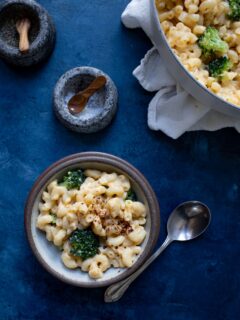
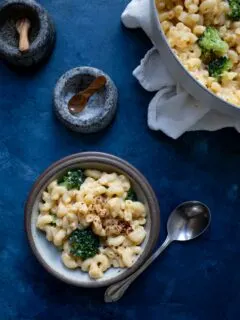
This is not the orange pasty mac and cheese out of a blue box.  This reinvented classic is made with Mascarpone, Asiago, and Fontina cheese with ramp pesto.  After dressing traditional elbow pasta with the creamy mixture it is put in the oven to bake until golden brown.  Perfect with a nice green salad, crusty baguette and a glass of Pinot Grigio.

ramp-pesto-0609

Jacqueline Church, of the very informative and fun site, The Leather District Gourmet and Suite 101.com, asked us to be part of her S/O/L/E Food Tuesday Event;  we were  more than honored, after all, have you seen how talented this woman is?  She cooks, writes for the above mentioned sites as well as other publications and has two books in the works!?

S/O/L/E Food Tuesday, what is is?  Sustainability, Cost, Local, Organics and Food Ethics.  It is a regular day set aside for you to eat non-meat inspired dishes.  Jacqueline stated it as the Non-Wimpy, Non-Hamburger Tuesday, which is perfect as veggies do not have to be Wimpy!  Upon researching what I wanted to make for this event, I became quite surprised about how much vegetarian inspired meals we actually eat.  We try to cut back on the consumption of meat, for health reasons as well as a way to keep our grocery costs down.  Regardless, we always try to shop using Jacqueline’s guidelines.  If, we cannot go local, we always go organic.  Whether you eating organically or locally, I find it hard to believe when people say they would never know what to eat vegetarian, just look around you, you are probably do it more than you think!

Remember that Ramp Pesto?    Well, the nice thing (we are trying to tell ourselves this) about being cold in San Francisco all year, is that comfort food never goes out of style.  One of the cold chilly nights recently, the images of mac and cheese started dancing through our heads, so we came up with this very adult or very sophisticated child version of Mac and Cheese.  I made an ultra creamy sauce using Mascarpone, Asiago and Fontina cheese and then smothered the heck out of some elbow pasta with some ramp pesto and the cheese mixture, baking it until golden and slightly crispy on top – WOW!  The toasty pine nuts and garlicky ramp pesto really complimented the pungent Fontina and the creamy Mascarpone.  Great vegetarian dish for a cold evening at home.

After you fill up on mac and cheese be sure to rush over to Jacqueline’s site – you will love it!!

ramp-pesto-mac-and-cheese-0609

Recipe:  Ramp Pesto Mac and Cheese

8 oz. fontina cheese

8 oz. mascarpone cheese

8 oz. asiago, grated

1/4 cup ramp pesto

1 lb elbow pasta, cooked until al dente

1/4 cup reserved pasta water

kosher salt, to taste

fresh cracked black pepper to taste

Cook pasta according to directions, drain and reserve 1/2 cup of the cooking water.  Mix cheeses (reserve about 1/4 cup of asiago),  with the reserved pasta water, until creamy, season with salt and pepper.  Mix pasta with pesto and cheese mixture and mix until blended.  Add to a buttered baking dish and sprinkle remaining asiago cheese on top.    Bake at 350 for about 20 – 30 minutes, until golden brown and lightly crispy on top.  Serve.  Eat.

SpaghettiOs and Pizookies

How do you get your kids to eat “gourmet” meatballs smothered with prosciutto rich tomato sauce;  by recreating an old time favorite, Chef Boyardee SpaghettiOs.

spaghettios-0509

I had originally made this dish a couple years ago, but never wrote down the recipe.  I have received a few emails asking for it so I decided it was time to make it for the MEM Big Special Weekend.   I use the meatball recipe also for hamburgers and Max tells me it is the best hamburger he as ever eaten (and he is a picky boy).  Your kids will love the circle pasta and the tiny meatballs.  Sure to be a hit with even your pickiest eater!

pizookie-0509

For dessert we made Pizookie.  I had never heard of a Pizookie until I read a post over at Diane & Todd’s site, White on Rice Couple.  As soon as I saw it, I knew I had to make it for the kids.  All day I told them about the surprise dessert the Pizookie, we liked saying it, we would be having, never letting on what it was.  They were so happy when I handed each of them a big deep dish, warm, gooey, chocolate chip cookie with vanilla bean ice cream.  The only compliant was, that they wanted it served with chocolate next time and maybe a little chocolate sauce, too!

Before reading the recipes don’t forget to FLIP OUT & enter our gift away!

Recipe:  SpaghettiOs

Sauce

1/8 lb prosciutto

1/2 yellow onion

2 cloves garlic

2 tablespoons olive oil

2 14 oz cans tomato sauce + 1 can water or red wine

1/2 teaspoon red pepper flakes

1/4 cup basil, roughly chopped

kosher salt, to taste

black pepper, to taste

1 lb. anelleth pasta, found at trader joes

parmesan cheese for serving

Heat olive oil in a deep saucepan.  Process prosciutto, garlic and onion in a food processor until finely minced.  Slowly cook in olive oil until caramelized, about 15 minutes.  Add the tomato sauce and water.  Stir in red pepper flakes and season with salt and pepper.  Lower heat and simmer for about an hour.  The longer you cook the more intense the flavor.  Before serving stir in basil.

Recipe:  Meatballs

1 lb ground beef, we prefer grass-fed

1/4 lb ground pork

1/4 lb ground veal, we prefer grass-fed

1/4 yellow onion, finely minced, I use a food processor

1/2 cup breadcrumbs

1 egg

kosher salt

fresh cracked black pepper

Mix everything together with hands.  Form into tiny meatballs.  If you have kids, they will love doing this.  Line a baking sheet with parchment paper and lay the meatballs on it.  Bake at 425 for about 15 – 30 minutes, turning occasionally, until they are cooked to your liking.  Before serving gently toss with the sauce.

While meatballs are cooking, cook pasta according to directions.

To serve:  Drain pasta well.  Toss with sauce and meatballs.  Sprinkle with Parmesan cheese.  Serve.  Eat.

Recipe:  Pizookie

Chocolate Chip Cookie Dough

Vanilla Bean Ice Cream

We used the tradition Toll House Chocolate Chip cookie recipe.  You can use your favorite one.

Heat oven to 350.  Lightly butter 4″ ramekins.  Fill 1/2″ deep with raw cookie dough.  Place ramekins on a baking sheet and place on the middle rack of oven.  Bake for about 10 – 15 minutes, or until the top starts to turn golden.  Remember to keep them slightly undercooked.

Remove from oven and let sit for about 5 minutes as to not burn little fingers.  Then place in a cloth napkin.  Top with a scoop of ice cream.  Serve.  Eat.  Enjoy the smiles on their little faces!


Back to Basics | How to Perfectly Soft Boil an Egg

egg-11

I love soft boiled eggs, cooked just right, with sea salt and fresh cracked pepper and a chunk of warm crusty baguette – it is a simple breakfast that is so satisfying.  I overdosed as a kid on soft boiled eggs, when I got sick once and the doctor said to eat them and chicken soup,everyday and that it would cure me.  It worked but I never really looked at a soft boiled egg the same, until my first trip to Germany.   Every inn I stayed at offered perfect soft boiled eggs, bread, cheese, yogurt and ultra creamy coffee – very fond memories.

As a regular reader you know how Lenny loves EGGS – any old way.  I knew when I saw this particular recipe in an issue of Donna Hay, that he would love the soft boiled egg garnished pasta dish.  I knew, I would probably skip the soft boiled egg on my pasta – some things are meant to stay in my breakfast category – but that the roasted garlic and cheese would make up for it.  I did change up the recipe a bit to give it a Chez Us signature … think olive oil, extra cheese and spring time fresh English peas.  As Donna would say, this dish was “Simple Made Simple” and ever so delicious!

Recipe: Soft Boiled Egg

1 egg

water

Bring water to boil in a saucepan.  Low heat to simmer, slowly and carefully add the egg.  Let the egg gently simmer for 3 – 5 minutes, depending on how soft you like your soft cooked egg.  I like it on the runny side for dipping the bread, so I cook it 4 minutes.  Remove from the water, and run it under cold water, just long enough so you can hold it.  Crack the egg in half.  Serve in a shallow bowl.  Sprinkle with salt and cracked pepper.   Eat.

roasted-garlic-pasta-with-egg-0409

Recipe: Roasted Garlic Pasta with Peas and Egg

*serves 4

1/2 head garlic

1 egg

1/2 pound angel hair pasta

2 tablespoons olive oil

1/4 cup heavy cream

1/2 cup finely grated parmesan

1/2 cup fresh english peas

sea salt

cracked black pepper

Preheat oven to 425.  Wrap garlic in foil and roast for 15 – 30 minutes or until soft, tender and slightly golden.  Squeeze garlic from skins and mash with a fork.  Cover to keep warm and set aside.

Cook the eggs following the above directions.  Drain and set aside to cool slightly before peeling.

Cook the pasta in a pan of salted boiling water for 3 minutes.  Drain well and return to the pan.  Add the olive oil and toss.  Then add the cream, 1/2 of the parmesan, garlic, salt and peas and toss to coat.  Divide between serving plates, halve the eggs and place on top to serve.  Sprinkle with remaining cheese.  Serve.  Eat.

Homemade Spinach Pasta with Ragu

Homemade spinach pasta rolled and cut into thin noodles, then tossed with a country style ragu and sprinkled with fresh grated Parmesan cheese, a wonderful and simple dinner.

spinach-pasta-with-ragu-0409

I normally do not have “food” in the freezer, except for the token ice cream container or a few containers of stock as well as different citrus juices.    We just aren’t big leftover, frozen food people;  but, a couple weeks ago we (I) made a fantastic home made Lasagne.   We were lucky enough to have left over pasta, which is very easy to make if you don’t have leftovers.  I decided to cut the pasta into noodles and freeze them for another time.  As well we had some of the ragu left over, this is the best Italian ragu I have ever had.  Not only is it fantastic tasting but it is simple to make.

Tonight I cooked the noodles, warmed up the ragu, tossed together a frisee salad and we had dinner – thank you freezer for feeding us so well!

Recipe

spinach egg pasta (pasta verde)

Makes enough for 6 to 8 first course servings or 4 to 6 main course servings, equivalent to 1 pound (450g) dried boxed pasta.

2 jumbo eggs (2 oz./60g or more)
10 oz. (300g) fresh spinach, rinsed dry, and finely chopped; or 6 oz. (170g) frozen chopped spinach, defrosted and squeezed dry
3 1/2 cups (14 oz./400g) all purpose unbleached (plain) flour (organic stone ground preferred)

Working by hand you will need: A roomy work surface, 24 to 30 inches deep by 30 to 36 inches (60cm to 77cm deep by 60cm to 92cm). Any smooth surface will do, but marble cools dough slightly, making it less flexible than desired. A pastry scraper and a small wooden spoon for blending the dough. A wooden dowel-style rolling pin. In Italy, pasta makers use one about 35 inches long and 2 inches thick (89cm long and 5cm thick). The shorter American-style pin with handles at either end can be used, but the longer it is, the easier it is to roll the pasta. Plastic wrap to wrap the resting dough and to cover rolled-out pasta waiting to be filled. It protects the pasta from drying out too quickly. A sharp chef’s knife for cutting pasta sheets. Cloth-covered chair backs, broom handles, or specially designed pasta racks found in cookware shops for draping the pasta.

Mixing the dough: Mound the flour in the center of your work surface and make a well in the middle. Add the eggs and spinach. Use a wooden spoon to beat together the eggs and spinach. Then gradually start incorporating shallow scrapings of flour from the sides of the well into the liquid. As you work more and more flour into the liquid, the well’s sides may collapse. Use a pastry scraper to keep the liquids from running off and to incorporate the last bits of flour into the dough. Don’t worry if it looks like a hopelessly rough and messy lump.

Kneading: With the aid of the scraper to scoop up unruly pieces, start kneading the dough. Once it becomes a cohesive mass, use the scraper to remove any bits of hard flour on the work surface – these will make the dough lumpy. Knead the dough for about 3 minutes. Its consistency should be elastic and a little sticky. If it is too sticky to move easily, knead in a few more tablespoons of flour. Continue kneading about 10 minutes, or until the dough has become satiny, smooth, and very elastic. It will feel alive under your hands. Do not shortcut this step. Wrap the dough in plastic wrap, and let it relax at room temperature 30 minutes to 3 hours.

Stretching and thinning: If using an extra-long rolling pin work with half the dough at a time. With a regular-length rolling pin, roll out a quarter of the dough at a time and keep the rest of the dough wrapped. Lightly sprinkle a large work surface with flour. The idea is to stretch the dough rather than press down and push it. Shape it into a ball and begin rolling out to form a circle, frequently turning the disc of dough a quarter turn. As it thins outs, start rolling the disc back on the pin a quarter of the way toward the center and stretching it gently sideways by running the palms of your hands over the rolled-up dough from the center of the pin outward. Unroll, turn the disc a quarter turn, and repeat. Do twice more. Stretch and even out the center of the disc by rolling the dough a quarter of the way back on the pin. Then gently push the rolling pin away from you with one hand while holding the sheet in place on the work surface with the other hand. Repeat three more times, turning the dough a quarter turn each time. Repeat the two processes as the disc becomes larger and thinner. The goal is a sheet of even thickness. For lasagna, the sheet should be so thin that you can clearly see your hand through it and see colours. Cut into rectangles about 4 by 8 inches (10 x 20 cm).

Dry the pasta at room temperature and store in a sealed container or bag.

Daring Bakers: Lasagne of Emilia-Romagna (Lasagne Verdi al Forno)

The March 2009 challenge is hosted by Mary of Beans and Caviar, Melinda of Melbourne Larder and Enza of Io Da Grande. They have chosen Lasagne of Emilia-Romagna from The Splendid Table by Lynne Rossetto Kasper as the challenge.

making-spinach-pasta-0309

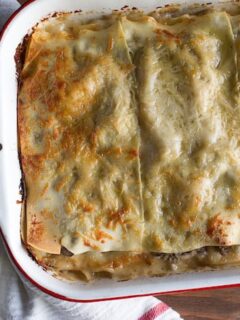
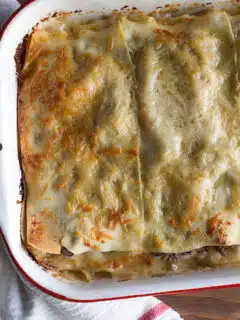
I thought I had until the end of the month to finish my Daring Bakers challenge.  Planned out the meal for the weekend.  Then I got a Tweet that the date had been moved up to the 27th … oh well, better late then never!  I was kind of nervous when I started making this recipe at 2pm.  I had seen a few tweets that it was an all day project.  I thought for sure we would be eating at 10pm, just as we would be in Italy!

I have always wanted to make a traditional ragu but have always thought it would be too much work.  Thanks to this challenge I finally did it.  I the ragu first.  The recipe calls for veal, pork, beef, pancetta and prosciutto.  I cheated a bit (hey I had a crazy week, give me a break), the butcher had just ground all three of the meats so I used these.  When I got home I food processed all the meats together with the prosciutto.   As well I wanted my minced veggies to be very fine so I processed them with the pancetta, the texture was perfect for ragu.  I had just enough left over beef stock that I made a while back, so i used that.  As well I did not use plum tomatoes as I have a container of frozen dry farmed ones, so I used those.  The sauce smelled so good while it was cooking and it was very flavorful and the meat was really tender, thanks to adding milk during the simmering process.  I would serve this sauce alone as well.

While the sauce was cooking, I made my pasta.  I was kind of concerned with making it without a pasta machine, but I did not have time to go out and get the much desired KitchenAid attachment.  I did have a bit of a problem getting it to come together, but after adding two more eggs, it was perfect.  I don’t think my eggs were “jumbo” enough.  I had visions of struggling with the rolling as I did when I made ravioli.  Luckily, Jeff and Andy got us a new French rolling pin and it worked perfect.  It was so much easier to get the dough very thin.  In fact after cutting my sheets for the lasagna pan, I had plenty leftover to make noodles.

The process was coming together really well.  It was 5pm and I was finally relaxed, time to pour a glass of Italian wine, we would be eating at a normal time.

I made the Bechamel sauce right before putting it together.  I love making bechamel sauces.   They are so easy and you can use them in pasta dishes, gratins, etc..  Sometimes I add cheese or sometimes I keep it simple as this recipe calls for.  I was going to skip the nutmeg but was glad I didn’t as it went really well with this dish.

daring-bakers-lasagna-0309

About two hours before we wanted to eat, I put the dish together.  It came out really well.  The pasta could have been a little thinner but overall it was fine and held up during baking.  The ragu is fantastic, we really loved the flavors of the smoky prosciutto coming through, the silkiness of the veal and the richness of the other meats.  The nutmeg of the bechamel came together nicely with the ragu.  A lovely rustic lasagna, that we will be eating again!

Thank you to our lovely hosts for picking a fantastic challenge.  Be sure to save your appetite and check out these other Daring Baker’s lasagnes.

Recipe: Lasagne of Emilia-Romagna (Lasagne Verdi al Forno)
from The Splendid Table: Recipes from Emilia-Romagna, the Heartland of Northern Italian Food by Lynne Rossetto Kasper
(Serves 8 to 10 as a first course, 6 to 8 as a main dish)

10 quarts (9 litres) salted water
1 recipe Spinach Pasta cut for lasagna
1 recipe Bechamel Sauce
1 recipe Country Style Ragu
1 cup (4 oz./125g) freshly grated Parmigiano-Reggiano

Working ahead: The ragu and the béchamel sauce can be made up to three days ahead. The ragu can also be frozen for up to one month. The pasta can be rolled out, cut and dried up to 24 hours before cooking. The assembled lasagna can wait at room temperature (20°C/68°F) about 1 hour before baking. Do not refrigerate it before baking, as the topping of béchamel and cheese will overcook by the time the center is hot.

Assembling the ingredients: Have all the sauces, rewarmed gently over a medium heat, and the pasta at hand. Have a large perforated skimmer and a large bowl of cold water next to the stove. Spread a double thickness of paper towels over a large counter space. Preheat the oven to 350°F (180°C). Oil or butter a 3 quart (approx 3 litre) shallow baking dish.

Cooking the pasta: Bring the salted water to a boil. Drop about four pieces of pasta in the water at a time. Cook about 2 minutes. If you are using dried pasta, cook about 4 minutes, taste, and cook longer if necessary. The pasta will continue cooking during baking, so make sure it is only barely tender. Lift the lasagne from the water with a skimmer, drain, and then slip into the bowl of cold water to stop cooking. When cool, lift out and dry on the paper towels. Repeat until all the pasta is cooked.

Assembling the lasagne: Spread a thin layer of béchamel over the bottom of the baking dish. Arrange a layer of about four overlapping sheets of pasta over the béchamel. Spread a thin layer of béchamel (about 3 or 4 spoonfuls) over the pasta, and then an equally thin layer of the ragu. Sprinkle with about 1 1/2 tablespoons of the béchamel and about 1/3 cup of the cheese. Repeat the layers until all ingredients are used, finishing with béchamel sauce and topping with a generous dusting of cheese.

Baking and serving the lasagne: Cover the baking dish lightly with foil, taking care not to let it touch the top of the lasagne. Bake 40 minutes, or until almost heated through. Remove the foil and bake another 10 minutes, or until hot in the center (test by inserting a knife – if it comes out very warm, the dish is ready). Take care not to brown the cheese topping. It should be melted, creamy looking and barely tinged with a little gold. Turn off the oven, leave the door ajar and let the lasagne rest for about 10 minutes. Then serve. This is not a solid lasagne, but a moist one that slips a bit when it is cut and served.

Recipe:  spinach egg pasta (pasta verde)
Makes enough for 6 to 8 first course servings or 4 to 6 main course servings, equivalent to 1 pound (450g) dried boxed pasta.

2 jumbo eggs (2 oz./60g or more)
10 oz. (300g) fresh spinach, rinsed dry, and finely chopped; or 6 oz. (170g) frozen chopped spinach, defrosted and squeezed dry
3 1/2 cups (14 oz./400g) all purpose unbleached (plain) flour (organic stone ground preferred)

Working by hand you will need: A roomy work surface, 24 to 30 inches deep by 30 to 36 inches (60cm to 77cm deep by 60cm to 92cm). Any smooth surface will do, but marble cools dough slightly, making it less flexible than desired. A pastry scraper and a small wooden spoon for blending the dough. A wooden dowel-style rolling pin. In Italy, pasta makers use one about 35 inches long and 2 inches thick (89cm long and 5cm thick). The shorter American-style pin with handles at either end can be used, but the longer it is, the easier it is to roll the pasta. Plastic wrap to wrap the resting dough and to cover rolled-out pasta waiting to be filled. It protects the pasta from drying out too quickly. A sharp chef’s knife for cutting pasta sheets. Cloth-covered chair backs, broom handles, or specially designed pasta racks found in cookware shops for draping the pasta.

Mixing the dough: Mound the flour in the center of your work surface and make a well in the middle. Add the eggs and spinach. Use a wooden spoon to beat together the eggs and spinach. Then gradually start incorporating shallow scrapings of flour from the sides of the well into the liquid. As you work more and more flour into the liquid, the well’s sides may collapse. Use a pastry scraper to keep the liquids from running off and to incorporate the last bits of flour into the dough. Don’t worry if it looks like a hopelessly rough and messy lump.

Kneading: With the aid of the scraper to scoop up unruly pieces, start kneading the dough. Once it becomes a cohesive mass, use the scraper to remove any bits of hard flour on the work surface – these will make the dough lumpy. Knead the dough for about 3 minutes. Its consistency should be elastic and a little sticky. If it is too sticky to move easily, knead in a few more tablespoons of flour. Continue kneading about 10 minutes, or until the dough has become satiny, smooth, and very elastic. It will feel alive under your hands. Do not shortcut this step. Wrap the dough in plastic wrap, and let it relax at room temperature 30 minutes to 3 hours.

Stretching and thinning: If using an extra-long rolling pin work with half the dough at a time. With a regular-length rolling pin, roll out a quarter of the dough at a time and keep the rest of the dough wrapped. Lightly sprinkle a large work surface with flour. The idea is to stretch the dough rather than press down and push it. Shape it into a ball and begin rolling out to form a circle, frequently turning the disc of dough a quarter turn. As it thins outs, start rolling the disc back on the pin a quarter of the way toward the center and stretching it gently sideways by running the palms of your hands over the rolled-up dough from the center of the pin outward. Unroll, turn the disc a quarter turn, and repeat. Do twice more. Stretch and even out the center of the disc by rolling the dough a quarter of the way back on the pin. Then gently push the rolling pin away from you with one hand while holding the sheet in place on the work surface with the other hand. Repeat three more times, turning the dough a quarter turn each time. Repeat the two processes as the disc becomes larger and thinner. The goal is a sheet of even thickness. For lasagne, the sheet should be so thin that you can clearly see your hand through it and see colours. Cut into rectangles about 4 by 8 inches (10 x 20 cm).

Dry the pasta at room temperature and store in a sealed container or bag.

Recipe:  Béchamel

4 tbsps (2 oz./60g) unsalted butter
4 tbsps (2 oz./60g) all purpose unbleached (plain) flour, organic stone ground preferred
2 2/3 cups (approx 570ml) milk
salt and freshly ground pepper to taste
nutmeg to taste, freshly grated

Using a medium-sized saucepan, melt the butter over low to medium heat. Sift over the flour, whisk until smooth, and then stir (without stopping) for about 3 minutes. Whisk in the milk a little at a time and keep the mixture smooth. Bring to a slow simmer, and stir 3 to 4 minutes, or until the sauce thickens. Cook, stirring, for about 5 minutes, until the sauce thickens. Season with salt, pepper, and a hint of nutmeg.

Recipe:  Country style ragu’ (ragu alla contadina)
makes enough sauce for 1 recipe fresh pasta or 1 pound/450g dried pasta)

3 tbsps extra virgin olive oil (45 mL)
2 oz./60g pancetta, finely chopped
1 medium onion, minced
1 medium stalk celery with leaves, minced
1 small carrot, minced
4 oz./125g boneless veal shoulder or round
4 oz./125g pork loin, trimmed of fat, or 4 ounces/125g mild Italian sausage (made without fennel)
8 ounces/250g beef skirt steak, hanging tender, or boneless chuck blade or chuck center cut (in order of preference)
1 oz./30g thinly sliced Prosciutto di Parma
2/3 cup (5 oz./160ml) dry red wine
1 1/2 cups (12 oz./375ml) chicken or beef stock (homemade if possible)
2 cups (16 oz./500ml) milk
3 canned plum tomatoes, drained
salt and freshly ground black pepper to taste

Working ahead: The ragu can be made 3 days ahead. Cover and refrigerate. It also freezes well for up to 1 month. Skim the fat from the ragu’ before using it.

Browning the ragu base: Heat the olive oil in a 12 inch (30cm) skillet (frying pan) over medium-high heat. Have a large saucepan handy to use once browning is complete. Add the pancetta and minced vegetables and sauté, stirring frequently with a wooden spoon, 10 minutes, or until the onions barely begin to color. Coarsely grind all the meats together, including the prosciutto, in a food processor or meat grinder. Stir into the pan and slowly brown over medium heat. First the meats will give off a liquid and turn dull grey but, as the liquid evaporates, browning will begin. Stir often, scooping under the meats with the wooden spatula. Protect the brown glaze forming on the bottom of the pan by turning the heat down. Cook 15 minutes, or until the meats are a deep brown. Turn the contents of the skillet into a strainer and shake out the fat. Turn them into the saucepan and set over medium heat.

Reducing and simmering: Add the wine to the skillet, lowering the heat so the sauce bubbles quietly. Stir occasionally until the wine has reduced by half, about 3 minutes. Scrape up the brown glaze as the wine bubbles. Then pour the reduced wine into the saucepan and set the skillet aside. Stir 1/2 cup stock into the saucepan and let it bubble slowly, 10 minutes, or until totally evaporated. Repeat with another ½ cup stock. Stir in the last 1/2 cup stock along with the milk. Adjust heat so the liquid bubbles very slowly. Partially cover the pot, and cook 1 hour. Stir frequently to check for sticking. Add the tomatoes, crushing them as they go into the pot. Cook uncovered, at a very slow bubble for another 45 minutes, or until the sauce resembles a thick, meaty stew. Season with salt and pepper.


Roasted Capsicum & Ricotta Pasta

Need a quick and easy dinner that is not boring?  Here is a simple and flavorful pasta dish using easy ingredients:  roasted capsicum (red peppers), fresh creamy ricotta and whole wheat pasta.

roasted-red-pepper-pasta-0209

Okay, forgive us …. we are on a Donna Hay kick again.  Sorry, we just cannot quit, her recipes are simple, and so darn good!!!

Tonight we made an easy pasta dish with roasted peppers and ricotta cheese.  I love both of these items for a few reasons.  Roasted peppers go well with pasta, on pizza, sliced over a bed of salt cod, or even in eggs.  Ricotta you can add to pasta, onto a pizza or even eat as dessert with honey drizzled over the top!  We usually have both items in the house and I guess, it can be called a “staple”.  You will love this easy pasta dish … dinner in 25 minutes!

Recipe: Roasted Capsicum (red peppers) & Ricotta Pasta

*serves 2
*adapted from Donna Hay

200g whole wheat pasta

150 g roasted capsicum, roughly chopped

1/4 cup pine nuts, toasted

2 small cloves garlic, minced

sea salt and cracked black pepper

2 tablespoons olive oil

100 g fresh ricotta

1/2 cup basil leaves (suppose to use mint but it went bad)

Cook the pasta in a saucepan of salted, boiling water for 10 – 12 minutes or until al dente.  Drain and return to the pan.  Place the capsicum, garlic, salt, pepper and olive oil in a bowl and stir to combine.  Add the pasta with the ricotta and basil and toss to combine.  Garnish with pine nuts.  Serve.  Eat.

Homemade Pork Schnitzel | Made Easily

pork-cutlet-0209

I don’t think I have had Schnitzel of any kind since I was in Germany, which was many years ago, so many it will age me! I remember it being crispy and saturated in butter;  it was delicious.  When I was poking around Simply Recipes a couple weeks ago I stumbled upon Pork Schnitzel and knew immediately, that we would be eating it very soon.  Schnitzel is basically a cutlet and in Germany it usually is veal.  While I love veal, Lenny is a little suspect so I knew this recipe would be perfect.

I was going to follow Elise’s recipe perfectly but when I got home I realized that I forgot to buy eggs and I could not possibly borrow another egg from my neighbors, I borrowed 3 this week already.  The dill I thought was growing in our herb garden was actually chives.  The chicken stock I usually have on hand had magically disappeared.  I knew the evening was off to a wrong start ….

The recipe was pretty easy and surprisingly, since I was missing so many ingredients, it came out really well.  I loved the crunchy texture of the fried panko and the pork came out very moist.  The sour cream was a really nice addition to the spiciness of the paprika and the milkiness of the pork.  I served it with a classic frisee salad drizzled with olive oil, fresh squeezed Meyer lemon and a sprinkle of sea salt and pepper.

Here is the Chez Us version of Pork Schnitzel.

Recipe:  Pork Schnitzel
  • 2 boneless pork chops – pounded thin
  • 1/8 cup flour
  • 1/2 teaspoon salt
  • 1/4 teaspoon freshly ground black pepper
  • 2 Tbsp milk
  • 3/4 cup panko
  • 3 teaspoons hot smoked paprika
  • 3 Tbsp olive oil
  • 1 tablespoon chopped chives
  • 1/4 teaspoon salt
  • 1/2 cup sour cream – not low fat

Use a meat cleaver and pound the pork cutlets to 1/4 inch thickness.

Set out 3 plates.  One will have a mixture of flour, salt and pepper.  The second one will have the milk.  The third will have a mixture of bread crumbs and paprika.

Heat the olive oil in a large skillet on medium heat, do not allow it to smoke.  Dredge the cutlets first in the flour, then the milk, and then the panko.    Coat well.

Sauté the cutlets for about 4 – 5 minutes on each side, until golden.   You may have to work in batches if your skillet is not big enough for two at a time – we had too.  Remove the cutlets from the skillet and cover with foil and keep warm in a preheated oven.

While the cutlets are cooking, in  a small bowl mix the chives and salt into the sour cream.

Serve the cutlets with the sour cream.  Eat.

R e c i p e   B o x
M o r e   i n f o